

Welcome.
Thanks for stopping by. This is where I share my writing and the things I’m passionate about. I hope it will be helpful to you.
Best regards,
















Change
It’s inevitable. You can run from it. You can hide from it. You can pretend it won’t happen. But as sure as the rising of the sun, things change. There are three truths we must face head-on if we’re going to successfully understand and navigate change. 1) Change is scary. Fear is the instinctive human response to change. Change makes us feel out-of-control as we face a future that is unpredictable. I recently spoke to
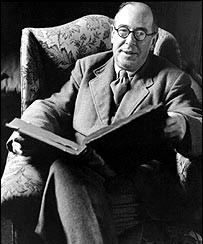
C. S. Lewis on balance
"A Christian must not be either a Totalitarian or an Individualist. I feel a strong desire to tell you–and I expect you feel a strong desire to tell me–which of these two errors is the worse. That is the devil getting at us. He always sends errors in pairs–pairs of opposites. And he always encourages us to spend a lot of time thinking which is the worse. You see why, of course? He relies on

Dealing with hard issues
Studying the word of God inevitably results in some hard questions. Paul the Apostle gives us an excellent example of how to handle things that are hard to comprehend. In Romans chapter eleven, Paul has just finished almost eleven chapters of deep doctrinal material—things like election, free will, sovereignty, justification, sanctification, and glorification—but Paul does not end this doctrinal section of Romans with a final apologetic exhortation. The way he ends this section of Romans

With regard to essential doctrines
By Charles Spurgeon The tree can do without some of its branches, though the loss of them might be an injury; but it cannot live at all without its roots: the roots are essential; take those away, and the plant must wither. And thus my dear friends, there are things essential in the Christian religion. . . . With regard to essential doctrines, it is very desirable for us to be established in the faith.
