

Welcome.
Thanks for stopping by. This is where I share my writing and the things I’m passionate about. I hope it will be helpful to you.
Best regards,






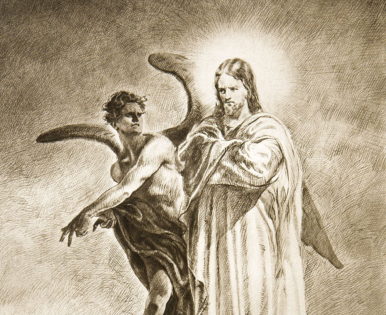














Those rigid literalists
Two weeks ago, I addressed the question of why they think we’re dangerous (and why they might be right). My conclusion was that fundamentalism is not dangerous except in two cases: When we have an unholy book. When we interpret a holy book improperly. Well, we can be sure that as Christian fundamentalists, we have a holy book. The Bible is the word of God Himself. The next point is a little harder though. Do

The gospel lifestyle
One bad habit of a Christian is to think of the gospel only as a decision—a commitment which was made years ago. So when he hears the gospel mentioned, he thinks "I've done that already," almost as if God's message of salvation has no further bearing on his life today. Paul saw the gospel differently: "I have been crucified with Christ. It is no longer I who live, but Christ who lives in me. And

I “have” power
“Power is the capacity or potential to influence. People have the power when they have the ability to affect others’ beliefs, attitudes, and courses of action…” In this article we will be simply touching on the concept of power. The idea of management versus leadership will be written about in the following week, rather than in this post as promised, as this post will become lengthy. Follow me as we explore this concept of power

A response to Kent Brandenburg’s post on epistemology
Several years ago, I spent the better part of a year studying a particular issue which has raised significant discussion in Fundamentalism in recent decades. It became apparent to me through that study that the real issue in the discussion really had very little to do with the issue itself. The real issue, I realised, was epistemology. Since that time I have invested some time learning about epistemology. I've written some posts on the issue